You nicked yourself. Here's every method people use to stop the bleed — ranked from worst (toilet paper) to best (styptic powder) — plus why cuts happen, how to treat each type, and when a cut is more than a nick.
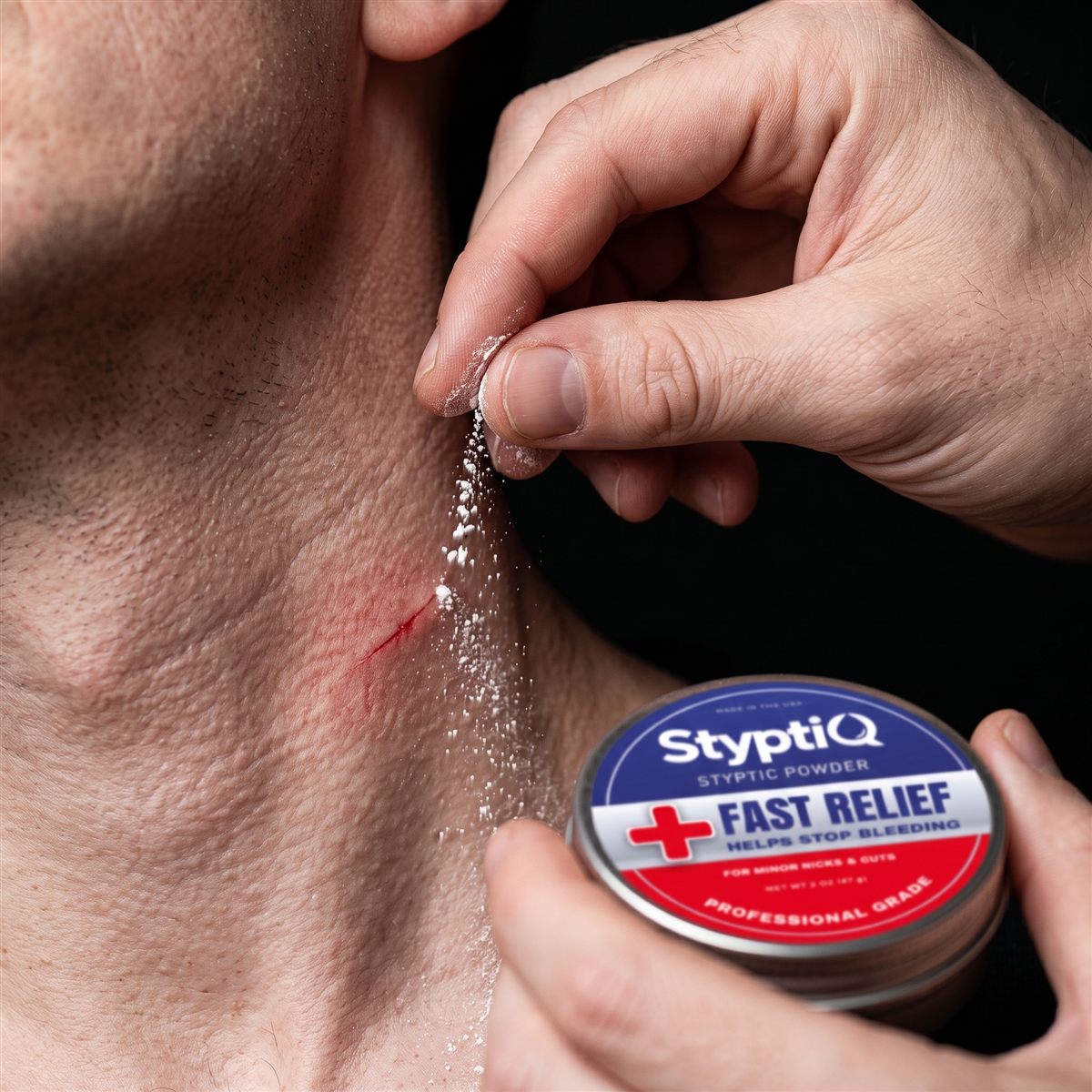
First: which kind of cut is it?
Shaving injuries aren't all the same, and the fix differs:
- Weepers — pinpoint spots of blood that appear across an area after a close pass, without a visible cut. Irritation at the follicle level. An alum block or cold rinse handles these; styptic powder is overkill.
- Nicks — the classic small slice, usually on chin, jawline, upper lip, or the bumps of the Adam's apple. Bleeds steadily out of proportion to its size. This is styptic powder's home turf.
- Cuts — a longer or deeper slice, often from a dropped razor angle or a slip. Styptic powder plus real pressure usually closes them, but read the "when to worry" section below.
Why facial cuts bleed so much
Your face is one of the most vascular areas of your body — dense capillary networks sit just under thin skin, and warm water plus shaving prep dilates them further. A razor also makes a perfectly clean slice, which gapes more and clots slower than a ragged tear. Tiny wound, generous plumbing, freshly widened pipes. That's the whole story, and it's also why a proper astringent beats waiting.
The methods, ranked worst to best
4. Toilet paper — the tradition that needs to die
It works through pressure and absorption — but it takes 5–15 minutes, leaves bits stuck to the dried blood, and often re-opens the cut when you peel it off. Then you walk into the office with confetti on your jaw. You've all done it. Stop doing it.
3. Cold water — a half-measure
Cold causes vasoconstriction, which mildly slows bleeding. But it only works while applied, you're pinned to the sink, and the moment you walk away the cut re-opens. Use a cold rinse to clean the area and calm weepers — not as the actual fix.
2. Aftershave — the wrong tool used bravely
Aftershave is an antiseptic with mild astringent properties. The alcohol will slow a bleed slightly, but it stings wildly out of proportion to how much it helps. It's a routine step, not a first-aid step. Apply it after the bleeding is stopped, not to stop it.
1. Styptic powder — engineered for exactly this
Potassium alum contracts the tissue and constricts the vessels at the cut site through an astringent reaction. The cut closes in under 10 seconds, with a brief sting that fades as the bleeding stops. That's why it's been on barber stations since the 1800s — no method invented since has beaten it for minor cuts.
The complete recovery sequence
- Rinse cold, once. Clear the blood so you can see the cut and the powder can reach it.
- Load the powder. Dip a damp fingertip or cotton swab into the tin — a pinch is plenty.
- Press and hold 5–10 seconds. Firm contact directly on the cut. Expect one second of sting.
- Wipe clean. Rinse or dab away the residue. The cut stays closed.
- Wait 30 seconds, then finish your routine. Balm or aftershave now goes on without drama.
Total time: about 45 seconds, most of it spent finding the tin. (Full illustrated walkthrough on the how-to-use page.)
Powder vs. pencil vs. alum block
All three are potassium alum; the form factor is the difference. The alum block is a post-shave rubdown for weepers and razor burn — great at that, slow on an actual cut. The styptic pencil targets cuts but needs wetting, cracks and crumbles over time, and gets grimy with use. Powder gives you a fresh dose every time, reaches awkward spots (under the jaw, behind the ear, the Adam's apple), and one tin outlasts a drawer of pencils. Detailed comparisons: powder vs. pencil and powder vs. alum block.
Aftercare — the part nobody does
- Don't touch it. The seal is fresh; fingers re-open it and add bacteria.
- Skip products with strong actives on that spot for a day — retinoids, exfoliating acids, heavy fragrance.
- Moisturize around it that evening. A hydrated skin barrier heals faster.
- Next shave, go around it. One pass over a healing nick restarts the whole cycle.
When a cut is more than a nick
Styptic powder is for minor cuts. Get medical attention if the cut is deep or gaping (edges don't meet), if bleeding continues after 15–20 minutes of firm continuous pressure, if you're on blood thinners or have a clotting disorder and the bleeding behaves unusually, or if days later you see spreading redness, warmth, or pus. Common sense, stated for the record.
Preventing the next one
Most shaving cuts trace back to five causes, all fixable:
- Dull or overused blades — a dull edge drags and skips instead of slicing. Change blades on a schedule, not on vibes.
- Too much pressure — let the razor's weight do the work, especially with safety and straight razors.
- Bad prep — warm water and a real lather soften hair so the blade cuts hair instead of skin.
- Wrong angle on curves — jawline, chin, and throat change the blade angle mid-stroke. Shorter strokes on curved terrain.
- Rushing — nearly every memorable cut happens in the last two minutes of a shave you're hurrying. Budget one more minute.
And keep the tin where you shave. Prevention fails occasionally — that's not a character flaw, it's why styptic powder exists. Works the same on head shaves, straight-razor shaves, and even your dog's quicked nail. Caught without a tin? Here's what substitutes actually work.
Need a tin?
Shop StyptiQ — $9.89