Somewhere along the way, styptic powder got filed under "pet supplies" in most people's heads — the yellow bottle next to the dog nail clippers. So people stand in the bathroom with a bleeding chin, Googling whether the stuff is safe for them. Short answer: it was yours first.
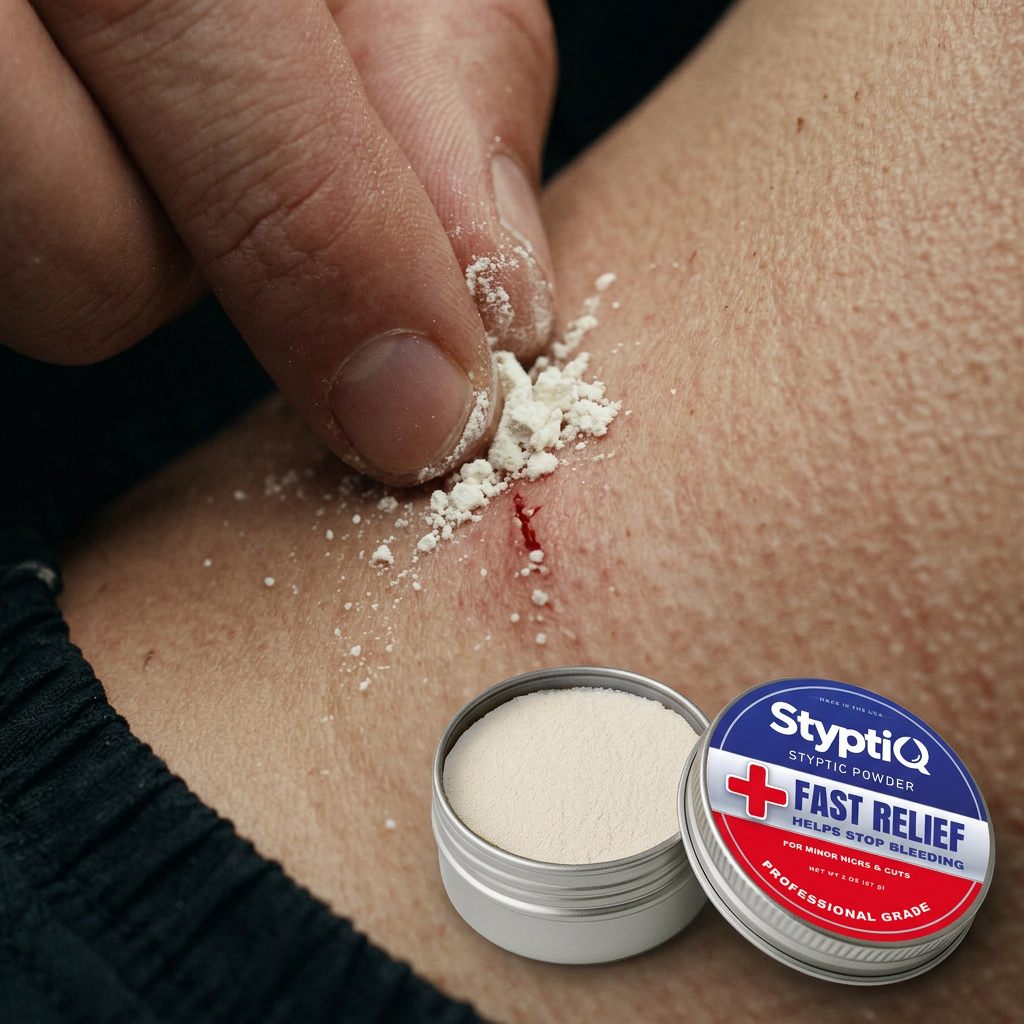
Humans used it first — for about a century
Styptic powder is potassium alum, a mineral astringent that contracts tissue and constricts small blood vessels on contact. Barbers have used it on shaving cuts since the 1800s. The styptic pencil — potassium alum molded into a stick — sat on practically every American sink shelf through the 20th century. The pet-grooming industry adopted the same ingredient later because it worked so well on quicked nails. So the real question isn't whether pet styptic powder works on humans; it's that the "pet product" is a human product wearing a different label.
What humans actually use it for
- Shaving nicks and cuts — face, jawline, head, neck, legs. The classic. A pinch pressed on for 5–10 seconds closes what toilet paper takes 15 minutes to not-quite-fix. (Full method here.)
- Hangnail tears and cuticle nicks — small, annoyingly persistent bleeders in a spot you use constantly. Styptic powder ends them immediately.
- Minor kitchen and workshop nicks — the shallow knife slip, the box-cutter graze. For anything more than a surface cut, see the "when not to" section.
- First-aid kit duty — a tin weighs a couple of ounces, never expires, and stops minor bleeding faster than gauze and pressure alone. That's why it's on our first-aid kit list.
How to use it (30 seconds, start to finish)
- Rinse the cut once with cold water so the powder contacts the wound, not a film of blood.
- Dip a damp fingertip or cotton swab into the powder — a pinch is plenty.
- Press directly onto the cut and hold for 5–10 seconds. Expect one second of sting.
- Wipe or rinse the residue. The cut stays sealed.
The sting is real but brief — comparable to aftershave on a cut, over much faster. If a spot keeps oozing, repeat with a fresh pinch and slightly longer pressure.
"Can I use my dog's styptic powder on myself?"
Usually, yes — with one check. Most pet styptic powders are potassium alum, same as the human product. But some pet formulas add benzocaine (a numbing agent) or fillers, so read the label before pressing it into your own face. This is exactly why we sell one single-ingredient tin instead of a "human version" and a "pet version": 100% potassium alum is 100% potassium alum. The same tin handles your razor nicks and your dog's quicked nail, which is the whole point of keeping one in the bathroom and one in the grooming kit.
When NOT to use it on yourself
- Deep or gaping cuts — if the edges don't meet on their own, you need closure, not powder.
- Eyes, mouth, nose, or any mucous membrane — astringents and mucous membranes don't mix.
- Burns, scrapes covering a large area, or puncture wounds — different injuries, different care.
- If bleeding hasn't stopped after 15–20 minutes of firm continuous pressure, or you're on blood thinners and the bleeding behaves unusually — get medical attention.
Styptic powder is a minor-cut tool. Used that way, potassium alum has one of the longest safety track records of anything in your bathroom.
Powder, pencil, or block?
All three are the same mineral. The alum block is a whole-face rubdown for post-shave irritation and weepers. The styptic pencil targets cuts but needs wetting, cracks with age, and gets grimy. Powder gives you a fresh, precise dose every time and reaches spots a pencil can't — under the jaw, behind the ear, the knuckle you just skinned. One 2 oz tin outlasts a drawer of pencils.
The bottom line
Yes, styptic powder is for humans — it always was. Keep a tin where you shave, know the short when-not-to list, and the next nick costs you ten seconds instead of a spotted collar. Caught without one? Here's what substitutes actually work until your tin arrives.
One tin. You, your dog, your whole house.
Shop StyptiQ — $9.89